
ChronoFlow.Run the audit-gradeworkflows you own.
Design governed workflows, run human approvals and system actions, recover live instances, and export the evidence your teams need to trust the process — inside your own environment.
Live
Workspace release
39
Workflow node types
6
AI node types
Ops
Runtime debugger
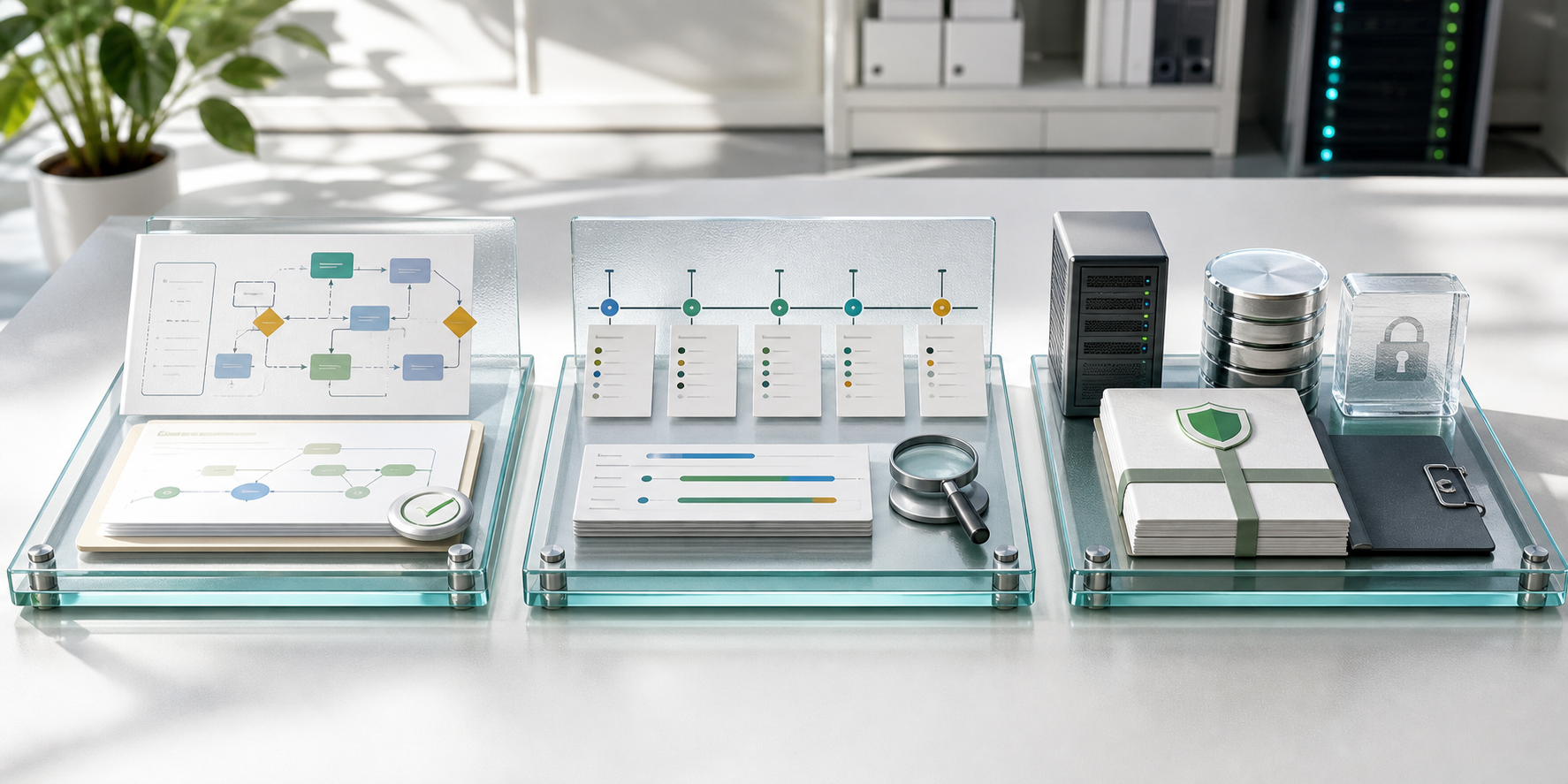 Pilot · evidence · private deployment
First pilot
One governed process
Approval, request, incident, HR, access, vendor, or service flow.
Proof path
Run history to evidence
Structured intake, owned tasks, runtime intervention, and exportable audit trails.
Deployment posture
Private-first
Docker, Helm, air-gap bundle assets, backup scripts, and admin controls.
It's no longer about drawing boxes. It's about proving operations.
ChronoFlow starts at intake, executes through a queue-backed runtime, pauses for people, recovers from failure, and preserves evidence end-to-end.
 Intake → policy → people → recovery → evidence
Capture the request
Forms · schemas · public submissions
Public and internal forms collect validated data, files, and context before anything reaches a queue.
Route through policy
Workflow canvas · versions · templates
A versioned workflow owns branches, timers, loops, signals, joins, subprocesses, and external actions.
Pause for people
Task queues · approvals · SLA
Human tasks, approval outcomes, comments, departments, delegation, and SLA warnings stay in the runtime record.
Recover safely
Runtime control center
Operators can inspect logs, pause, resume, cancel, retry, replay checkpoints, and plan runtime modifications.
Export the proof
Evidence · audit · trust center
Audit logs, execution history, incidents, admin events, and evidence exports support compliance review.
A live control plane for the whole workflow lifecycle.
Operators need more than a canvas screenshot. ChronoFlow brings design, execution, intervention, and evidence into a single operating model.
Instance PR-2048
Paused on finance approval
Owner
Tracked
SLA
Tracked
Evidence
Tracked
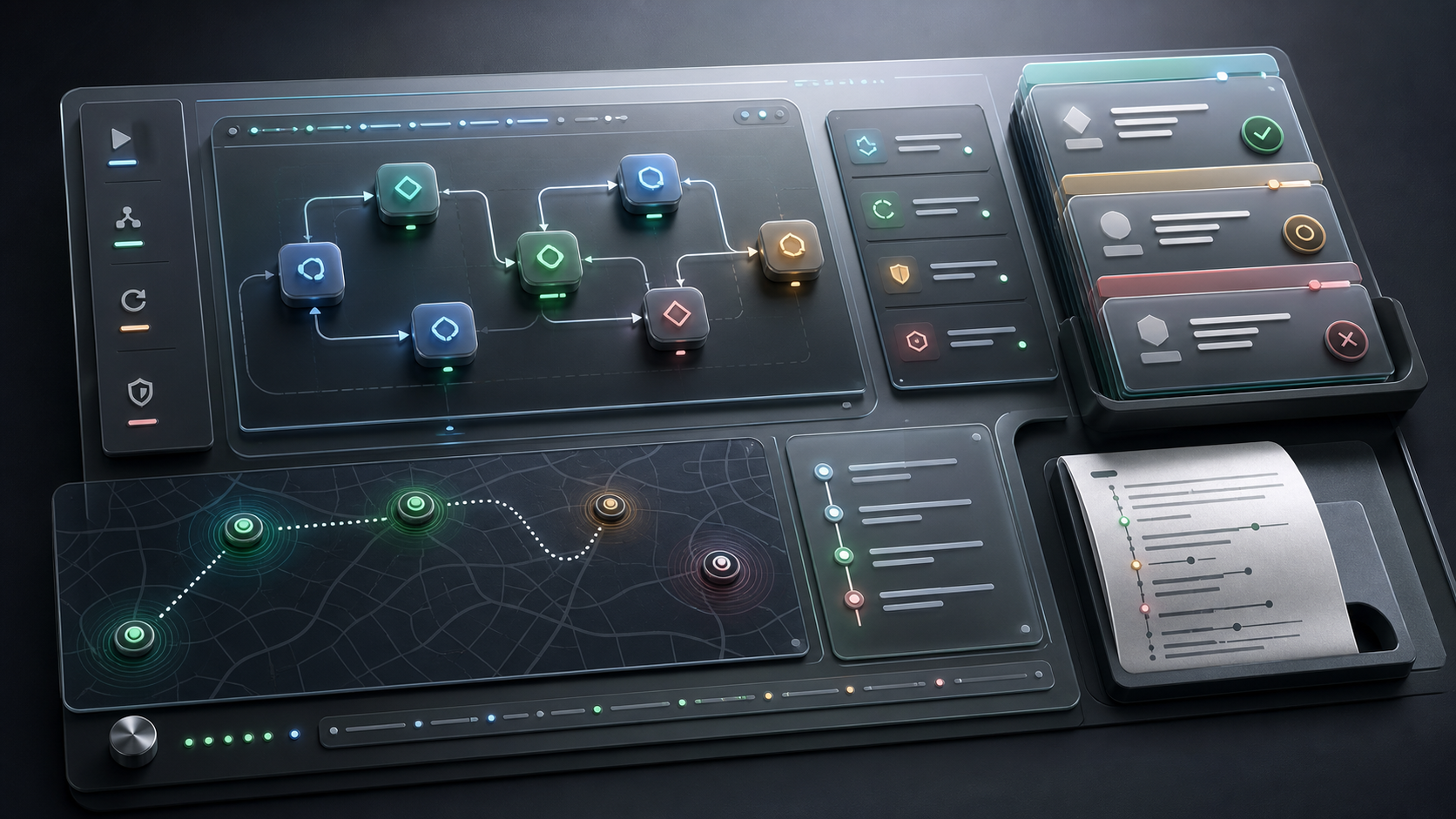 Run mode · live
Run evidence
The runtime executes human-plus-system flows through queues, timers, retries, integrations, checkpoints, and durable state.
A node palette built for real operations — 59 executable types across 15 categories.
Control flow, human work, integrations, data, communication, loops, events, governance — every step the PRD describes has a backing executor, schema, and runtime semantic.
Triggers
4 nodesWorkflow entry events
Control Flow
7 nodesFlow control nodes
Human Tasks
2 nodesPeople, approvals, and SLA routing
Actions
12 nodesExecute operations
Integrations
12 nodesConnect external systems
Data
6 nodesLookup and data operations
Documents
2 nodesDocument and file artifacts
Files
1 nodesFile storage operations
AI / Documents
1 nodesDocument intelligence
Communication
3 nodesSend messages
Loops
2 nodesIteration and looping
Events
2 nodesSignal and message events
Other
3 nodesAnnotations and helpers
Governance
1 nodesFailure capture and policy records
Observability
1 nodesOperational visibility and alerting
Describe the process. Land a draft workflow with a linked form.
ChronoFlow's blueprint engine ships with provider-agnostic LLM access, organizational context gathering, streamed progress, blueprint validation, and admin-controlled rate limits.
Generate blueprints
Describe a workflow in natural language. The /ai/generate-blueprint endpoint returns a draft workflow plus optional linked form.
Streamed progress
Server-sent events emit progress through prompt prep, context gather, model generation, validation, and creation phases.
Enhance drafts
Iterate on existing or proposed blueprints with additional instructions through /ai/enhance-blueprint.
Governed providers
Admin AI settings configure provider, model, and key; sensitive values are encrypted, sanitized, and rate-limit guarded.
prompt: "Capture vendor onboarding requests, run finance review,
          notify procurement on rejection, persist evidence."

event: prompt_prepared      ✓ system + user prompts assembled
event: context_gathered     ✓ 4 departments, 7 integrations, 12 workflows
event: model_generation     ⠋ 1.4s elapsed · streaming tokens
event: blueprint_validated  ✓ 11 nodes, 14 edges, 1 form linked
event: workflow_created     ✓ id: wf_vendor_onboarding_v1
                            ↳ requires publish review
Validation
Zod + graph rules
Provider
Configurable
Publish
Human-gated
Forms and approvals turn requests into accountable work.
Form intake and human task execution are first-class product surfaces: public submissions, linked task forms, department queues, comments, approvals, and SLA state all feed the runtime trail.
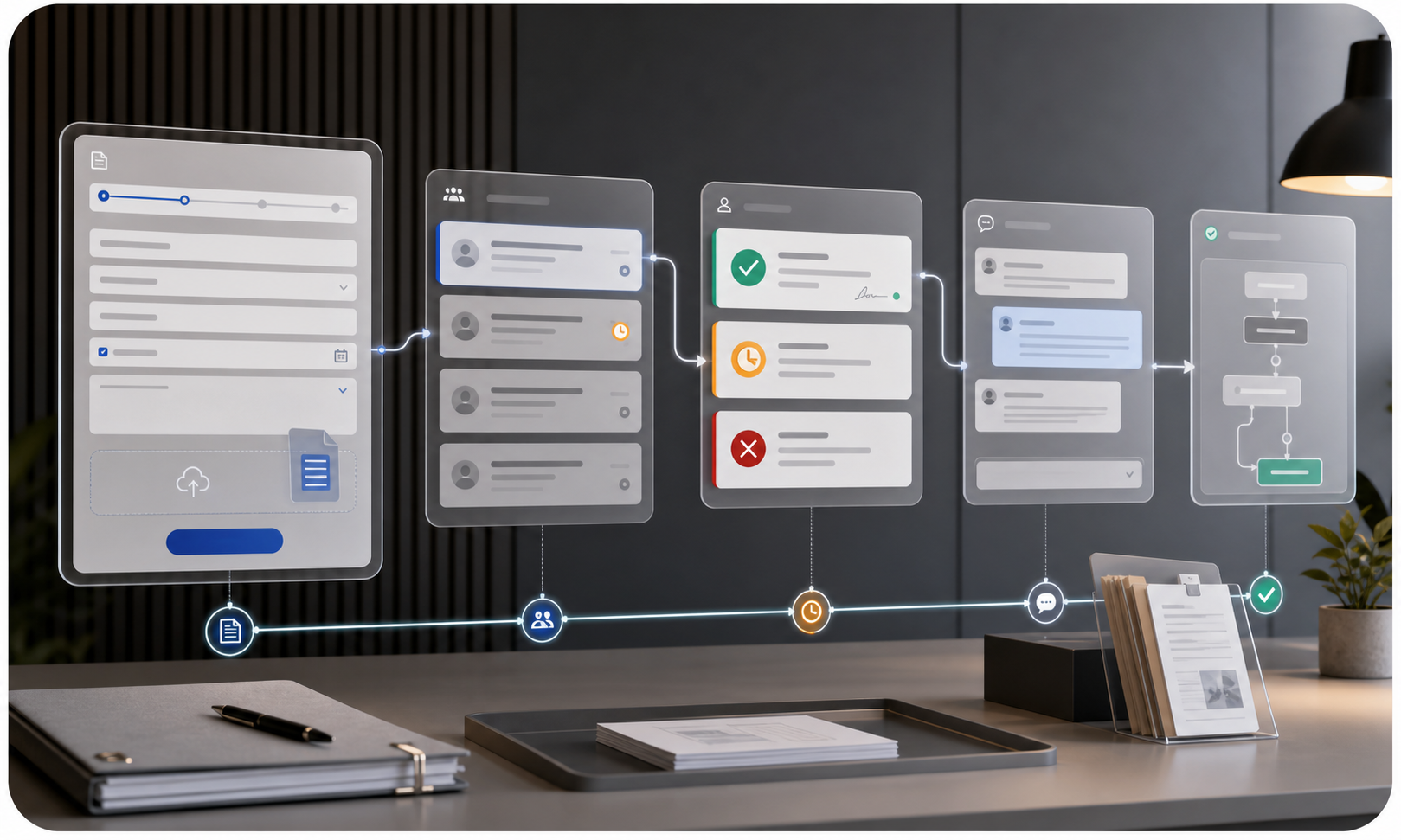 Intake · queues · approvals · evidence
Structured intake
Internal and public forms validate submissions, capture files, and attach request context before workflow execution starts.
Owned human work
Personal queues, department pools, supervisors, delegation, comments, and linked forms keep approvals accountable.
SLA-aware decisions
Due dates, warning thresholds, breach timestamps, and completion states preserve operational pressure in the record.
Evidence by default
Submitted data, task outcomes, comments, attachments, and runtime history become part of the reviewable process trail.
Two governed API surfaces. Both tenant-scoped and audit-logged.
The Runtime API starts, inspects, and controls instances. The External CRUD API exposes selected core entities behind feature-gated, rotatable API keys with sanitized responses.
Auth
Hashed API keys
Scope
Org-isolated
Audit
Every mutation
Runtime API
- POST
/api/v1/runtime/workflows/:id/startStart an instance - GET
/api/v1/runtime/instances/:idFull instance detail - GET
/api/v1/runtime/instances/:id/historyExecution timeline - POST
/api/v1/runtime/instances/:id/pausePause running work - POST
/api/v1/runtime/instances/:id/retryRetry failed node - POST
/api/v1/runtime/instances/:id/replayReplay from checkpoint
External CRUD API
- GET
/api/v1/crud/usersList users - POST
/api/v1/crud/tasksCreate task - PATCH
/api/v1/crud/submissions/:idUpdate submission - DELETE
/api/v1/crud/departments/:idRemove department
Secure ingress
Webhook triggers support public, HMAC, API key, and bearer patterns for controlled external starts.
Runtime APIs
External systems can start, inspect, pause, resume, retry, cancel, and review workflow instances through governed endpoints.
Operational data
Virtual objects, lookups, database nodes, and mapping tools give workflows durable business context.
Credential boundaries
API keys, webhook secrets, integration credentials, and provider keys are handled with sanitized surfaces.
Webhooks, APIs, and data objects plug the workflow into the rest of the estate.
ChronoFlow exposes runtime control, external CRUD, signed ingress, outbound system steps, lookups, and virtual objects so private workflows can sit inside existing enterprise systems.
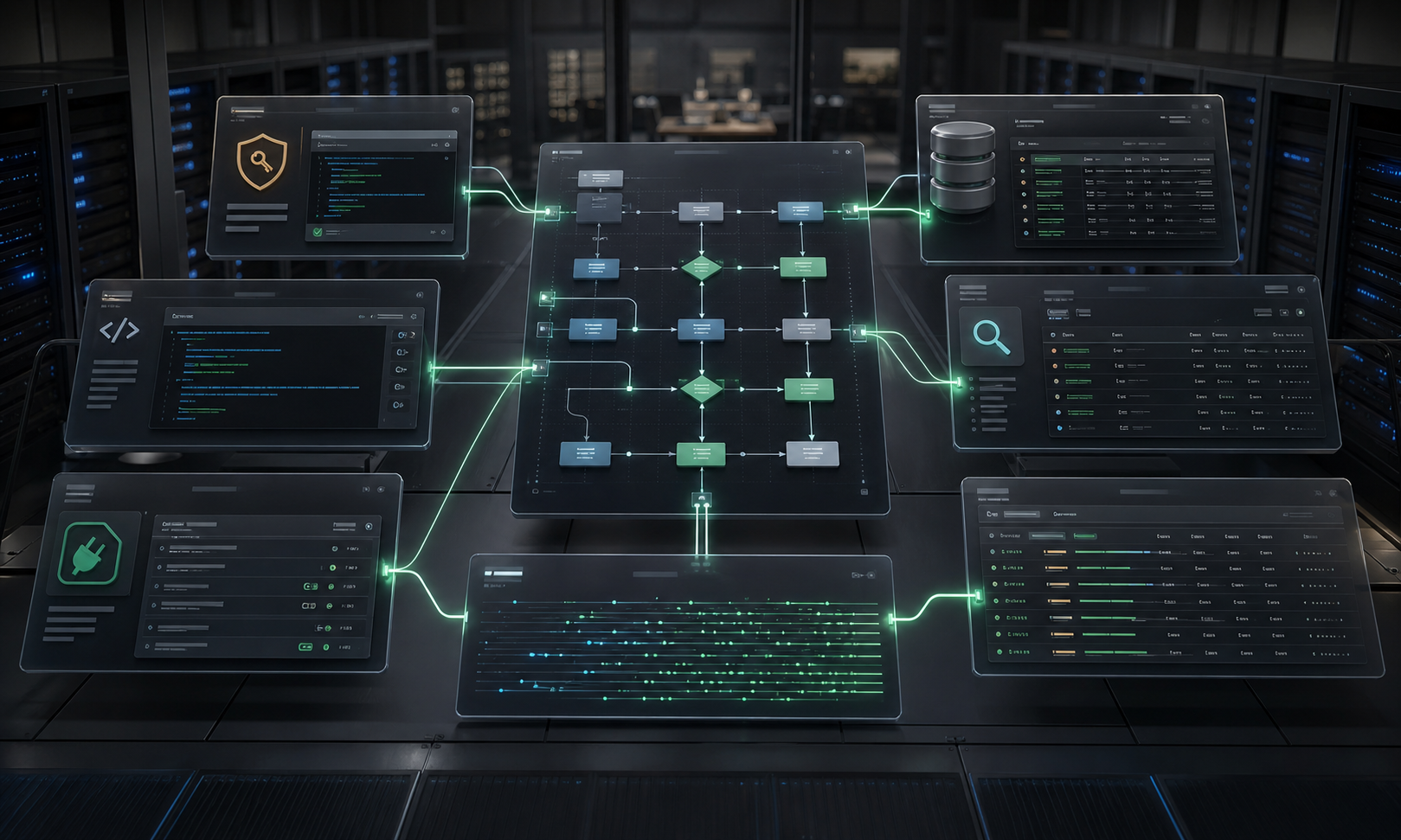 Webhook · API · data · credentials
The architecture story matches the runtime promise.
It's more than a frontend canvas: queued execution, persistent instance state, worker processing, admin governance, evidence records, and private deployment assets — together.
App and API
Next.js 14 App Router, React 18, TypeScript, and a NestJS API form authoring, admin, runtime, and public form surfaces.
Async execution
Redis and BullMQ coordinate queued workflow execution, scheduled work, retries, delays, and worker processing.
Durable state
PostgreSQL stores workflow versions, instances, tasks, submissions, incidents, audit logs, and configuration.
Private operations
Docker, Helm, backup and restore scripts, air-gap packaging, and deployment checklists support private rollout.
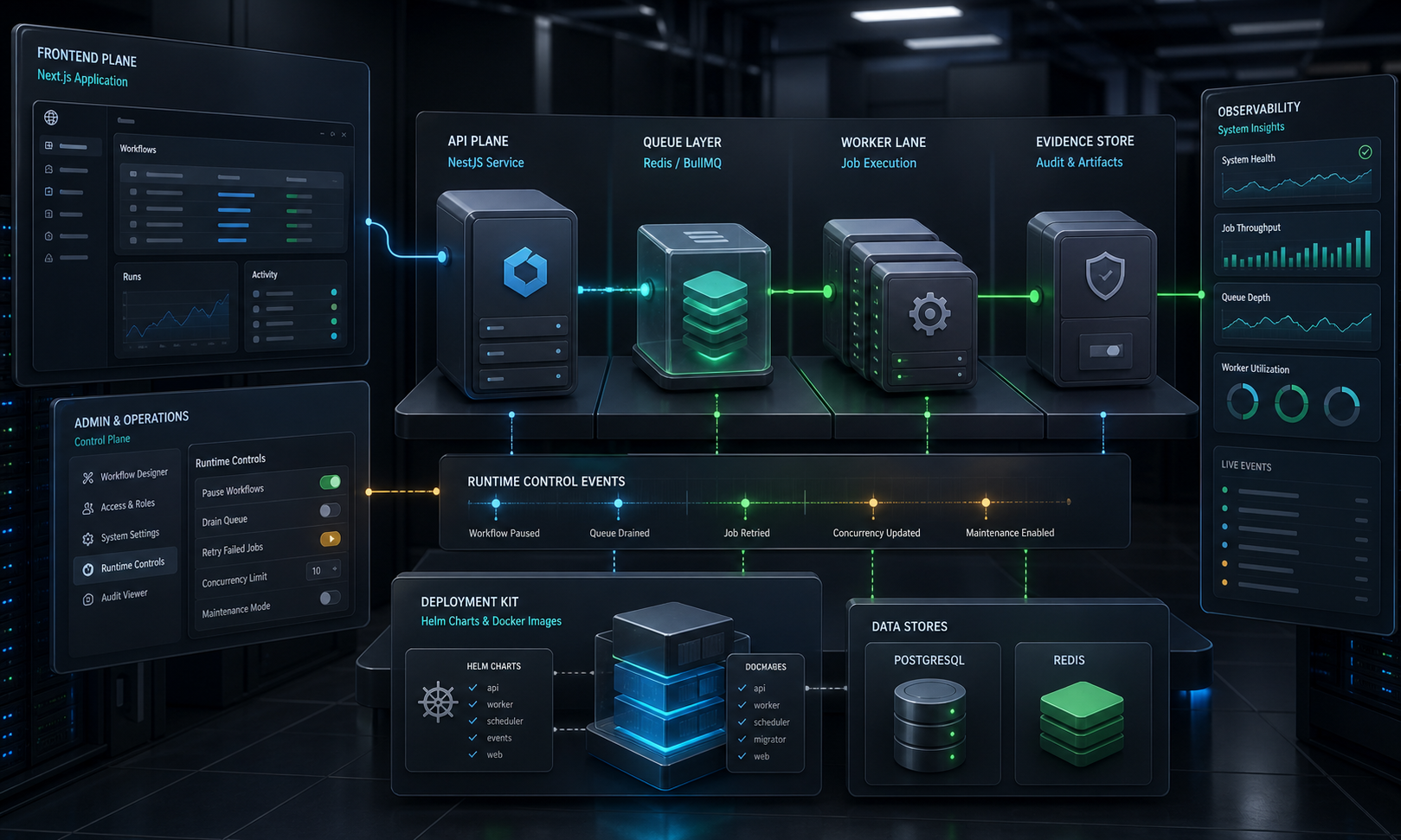 Next.js · NestJS · BullMQ · PostgreSQL
Built for the people who own rollout, not only the people who draw diagrams.
Six personas with clear daily surfaces — admins, designers, operations managers, task assignees, integration developers, and implementation partners.
 Admins · designers · operators · assignees · integrators · partners
Organization admin
Manage users, roles, sessions, SSO, departments, API keys, audit logs, license posture, and private deployment readiness.
Workflow designer
Model processes visually, configure node behavior, link forms, validate routes, publish versions, and reuse templates.
Operations manager
Monitor instances, resolve failures, reassign blocked work, replay from checkpoints, and preserve intervention history.
Task assignee
Claim, complete, approve, reject, comment, and submit linked task forms from personal and department queues.
Integration developer
Configure integrations, webhooks, runtime API keys, virtual objects, lookups, and data sources with sanitized credential handling.
Implementation partner
Assess legacy assets from K2/Camunda, install accelerators, prepare private deployments, and package pilot use cases.
Capability depth with clear boundaries.
No inflated platform claims. Available features sit alongside roadmap separately, so regulated teams know what they can pilot now.
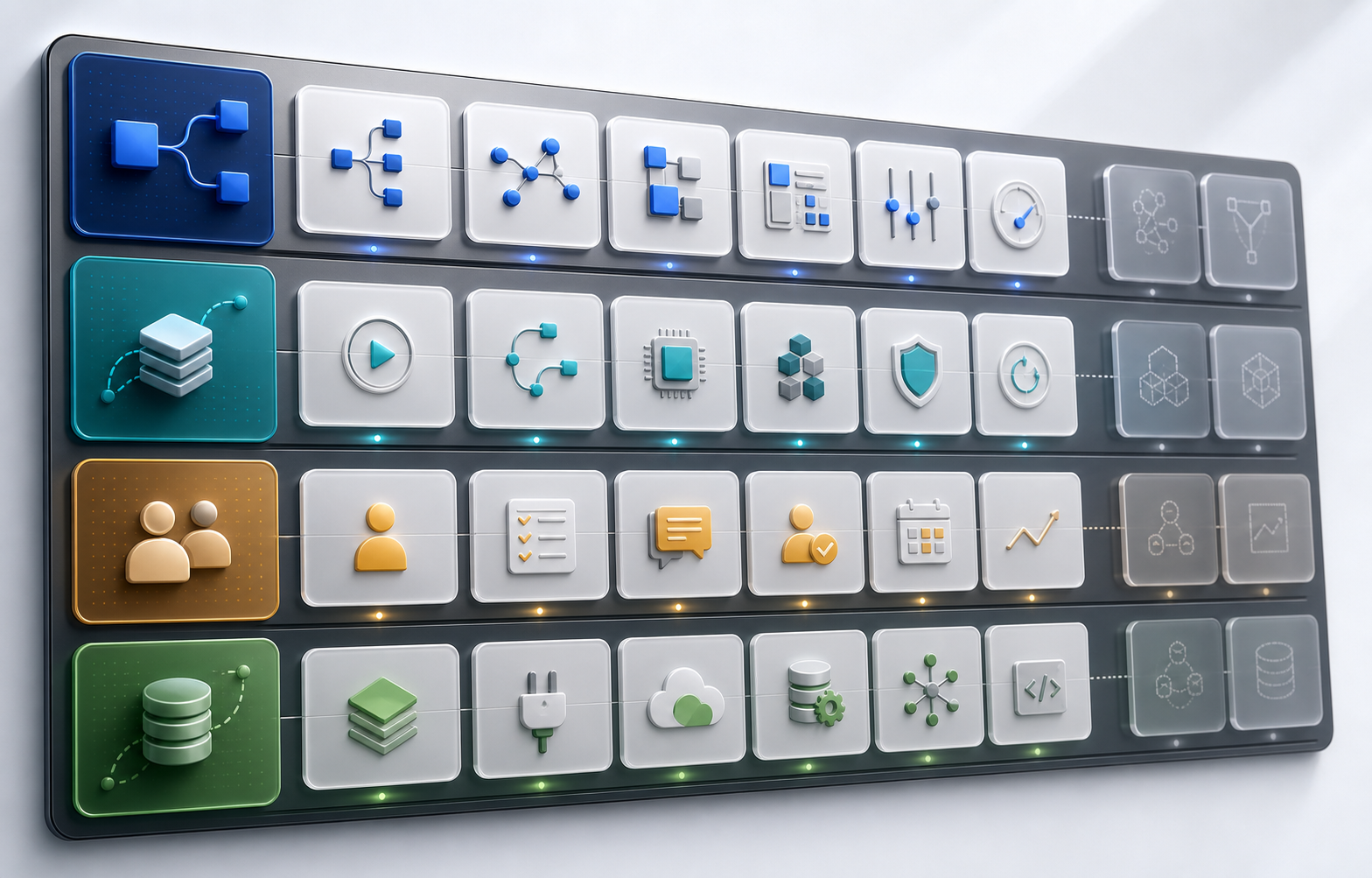 Available now · roadmap separated
Authoring
Runtime
Human work
Data and integrations
Controls live next to the work they govern.
ChronoFlow ties identity, permissions, API access, runtime actions, audit logs, tenant context, and deployment operations directly to the workflow lifecycle.
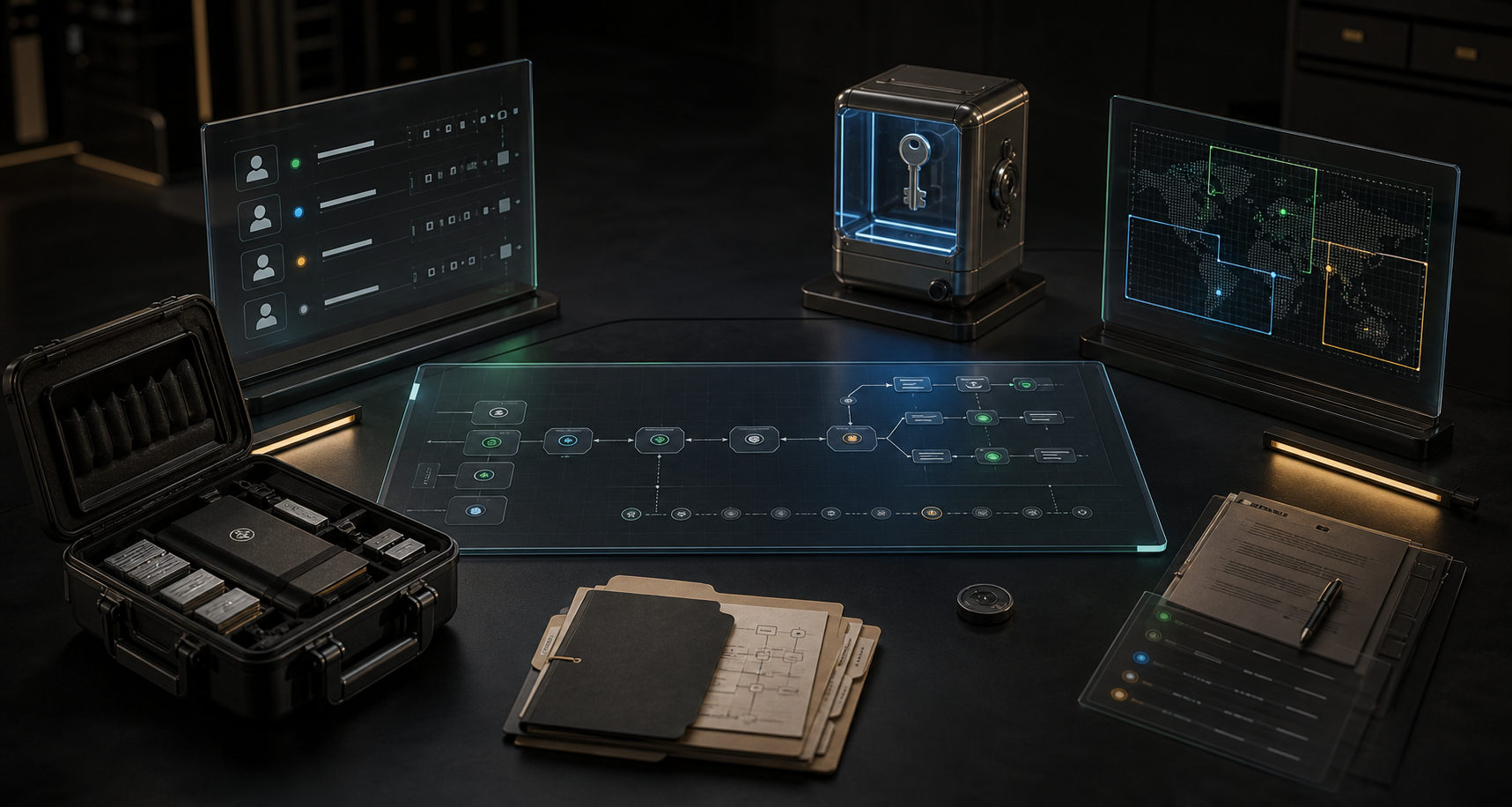
Identity and access
JWT auth, roles, permissions, sessions, SSO configuration, password policy, and admin-only operations.
Secret-aware integrations
Integration credentials, AI provider keys, webhook secrets, and API keys are sanitized or hashed before unsafe exposure.
Tenant-aware APIs
Organization context flows through protected services, runtime APIs, external CRUD, forms, workflow execution, and API keys.
Private operations kit
Docker Compose, Helm chart, backup and restore scripts, air-gap bundle support, and deployment checklists live with the product.
Six layers of evidence — the audit story your reviewers actually ask for.
Workflow lineage, runtime trails, human actions, admin mutations, external access, and file events all write structured records tied to organization context.
Workflow lineage
Versions, publishes, restores, and change history preserve who shipped what and when.
Runtime trail
Execution logs, checkpoints, incidents, and runtime interventions are stored per instance.
Human evidence
Task actions, approvals, comments, delegations, SLA warnings, and attachments anchor accountability.
Admin audit
Settings changes, role and permission updates, API key rotation, and SSO changes write structured audit events.
External access
Runtime API and external CRUD calls record actor, target, outcome, and request context for tenant-scoped review.
File evidence
Upload, link, signed download, and delete events on attached files are audited per organization.
Authentication
JWT, SSO discovery, OAuth/OIDC start & callback, password policy.
Authorization
Role + permission guards across runtime read/pause/resume/retry/cancel.
Secret handling
Hashed API keys, signed file URLs, sanitized integration responses.
Move K2 and Camunda assets into a private platform without guessing.
Analyze, gap-report, preview, and persist — every migration mutation is audit-logged with coverage, readiness, bundle digest, and workflow metadata.
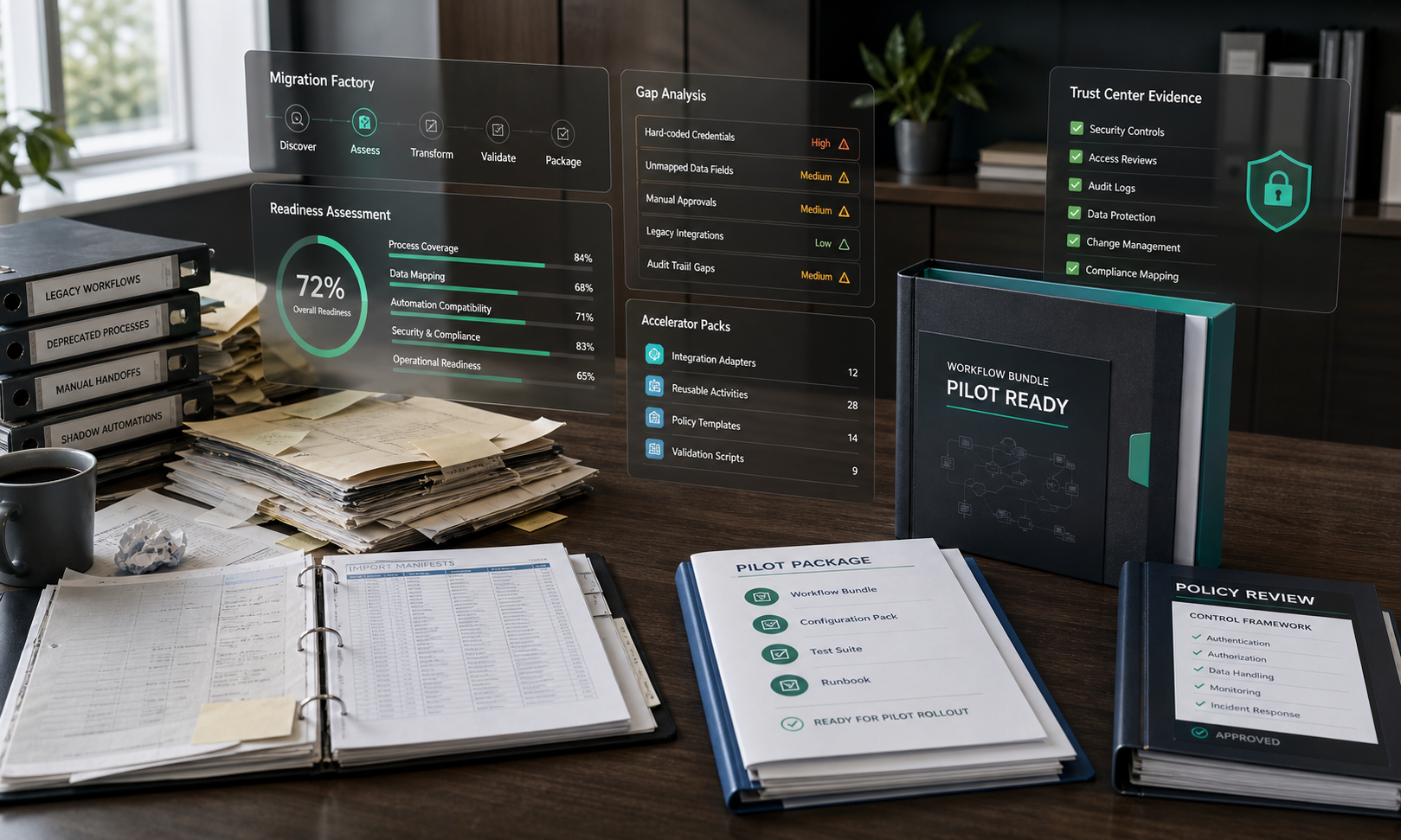 K2 · Camunda · accelerators · evidence
Analyze
Parse K2 or Camunda manifests and produce inventory, coverage percentage, supported/unsupported assets, and readiness signals.
Gap report
Identify unresolved items, manual review work, and unsupported steps before a single workflow lands in the new platform.
Preview import
Compile a workflow bundle, see compatibility, readiness, and unresolved manifest output without persisting anything yet.
Persist & publish
Create workflows from approved bundles, optionally auto-publish, and audit-log every migration mutation with bundle digest.
Accelerators ship with the platform
A private pilot path that can survive real enterprise review.
Prove one governed process before scaling: choose a workflow, map controls, run privately, export evidence, then expand through reusable patterns.
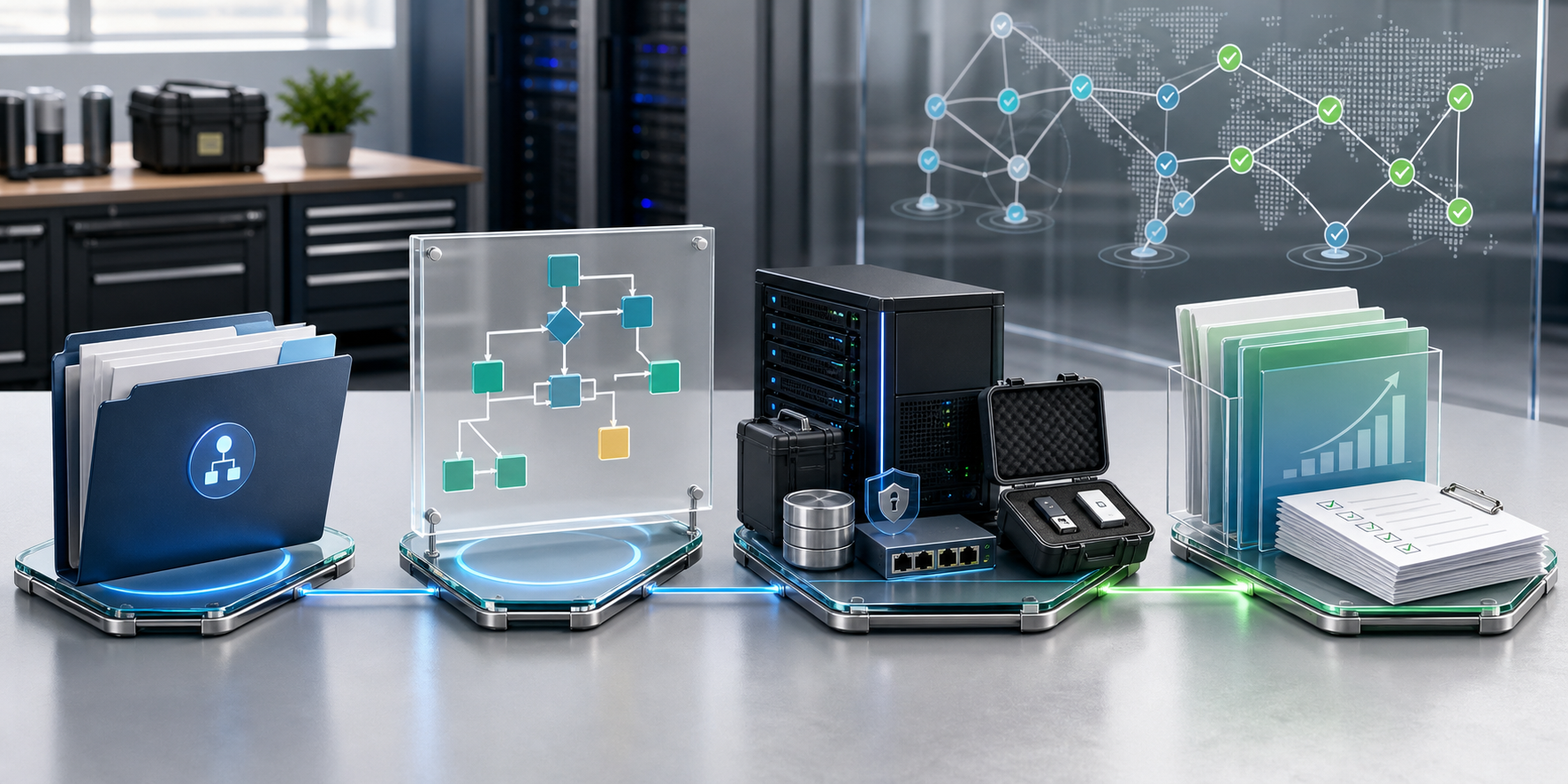 Docker · Helm · air-gap bundle
Select the process
Pick one high-friction approval, request, incident, access, procurement, HR, vendor, or service workflow.
Map the operating model
Define intake schema, owners, task queues, runtime controls, integrations, evidence expectations, and rollout permissions.
Run in a private environment
Use the existing deployment kit to validate data ownership, admin controls, backup behavior, and operational readiness.
Prove and expand
Export evidence, review failures and bottlenecks, then turn the pilot into reusable implementation patterns.
Integration paths already in the story
Twelve operational signals the platform already supports.
Workflow success, completion latency, SLA, retries, approval cycle time, webhook health, migration coverage, and more — derivable from shipped surfaces.
Workflow success rate
By workflow and version
Completion percentiles
Median and tail latencies
SLA warning + breach rate
Task and approval lifecycle
Retry & failure mix
Per node type
Approval cycle time
Owner, queue, decision lag
Webhook trigger health
Count and failure rate
Conservative answers for serious buyers.
Copy stays close to the as-built PRD — strong on shipped governance and runtime controls, explicit about current product boundaries.
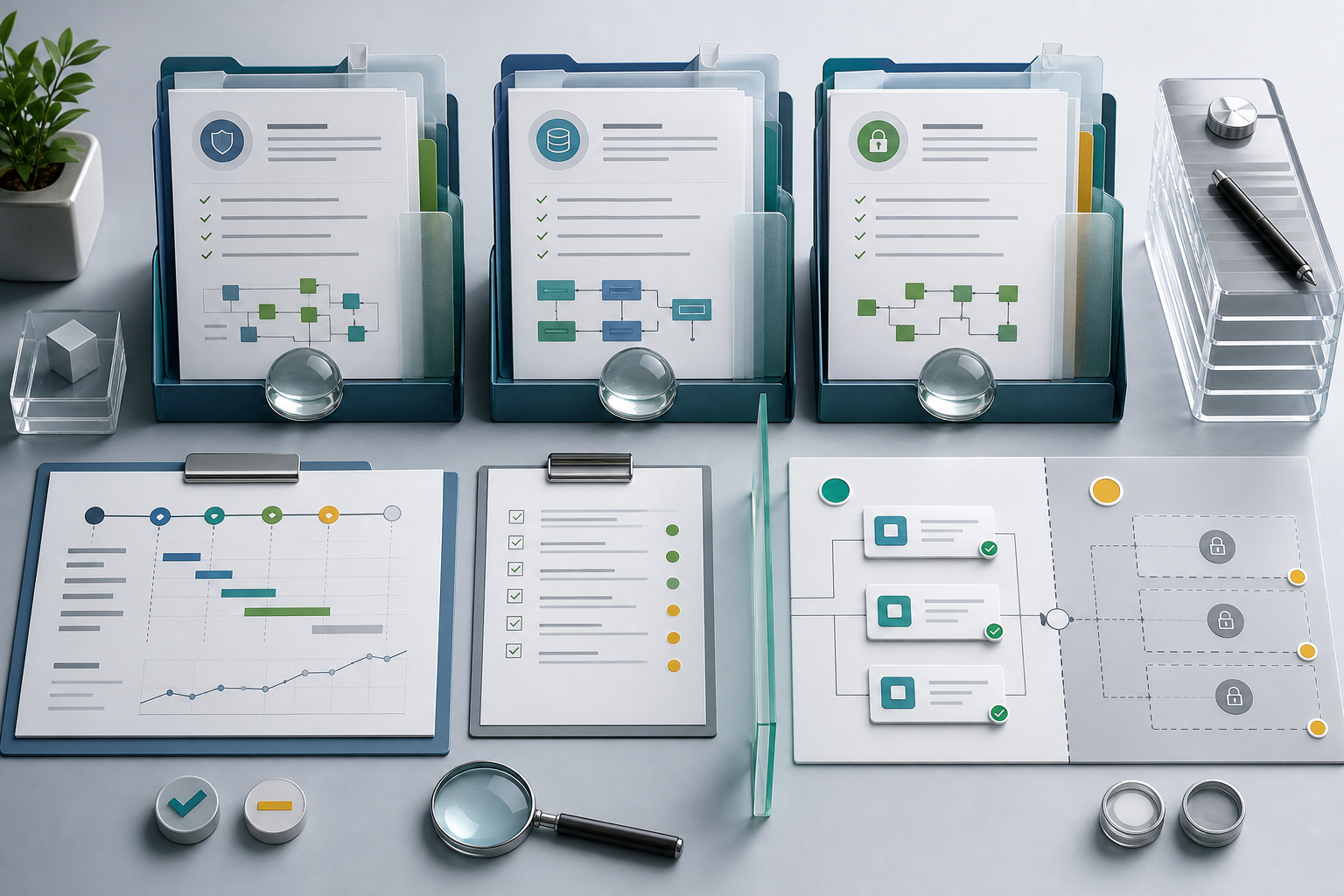 Shipped vs. boundary, made explicit
Is ChronoFlow a public SaaS automation tool?
The PRD positions ChronoFlow as private workflow orchestration for regulated operations, with a pilot-led deployment path and controls around identity, audit evidence, and runtime intervention.
Where does the audit evidence come from?
Evidence is assembled from structured form submissions, workflow versions, task actions, execution logs, incidents, runtime controls, admin mutations, and audit log filters.
Can it replace every BPMN workflow unchanged?
No. The current product is not claiming exact BPMN import/export fidelity. Migration tooling helps assess K2 and Camunda assets, produce reports, and identify manual implementation gaps.
How are external systems integrated safely?
Webhook security supports public, HMAC, API key, and bearer modes; runtime and external CRUD APIs use hashed keys with org-scoped guards and permission decorators; provider/integration secrets are sanitized at the response boundary.
What happens when a running instance gets stuck?
Operators can inspect logs, pause/resume/cancel/retry, re-execute individual nodes, jump to a node where permitted, list checkpoints, replay from a checkpoint, preview modification plans, or migrate the instance to a newer workflow version.
Is the AI generation production-ready?
AI blueprint generation assists authoring. Outputs are validated, sanitized, and still require human review and publish-gate validation before they reach a runtime version.
Bring one messy process. Leave with a governed pilot path.
Map the workflow, connect intake and approvals, test runtime controls, and generate evidence before expanding to more departments.
 From messy process to governed pilot